The Double Recall: Why It Completely Changed Swift’s Recall
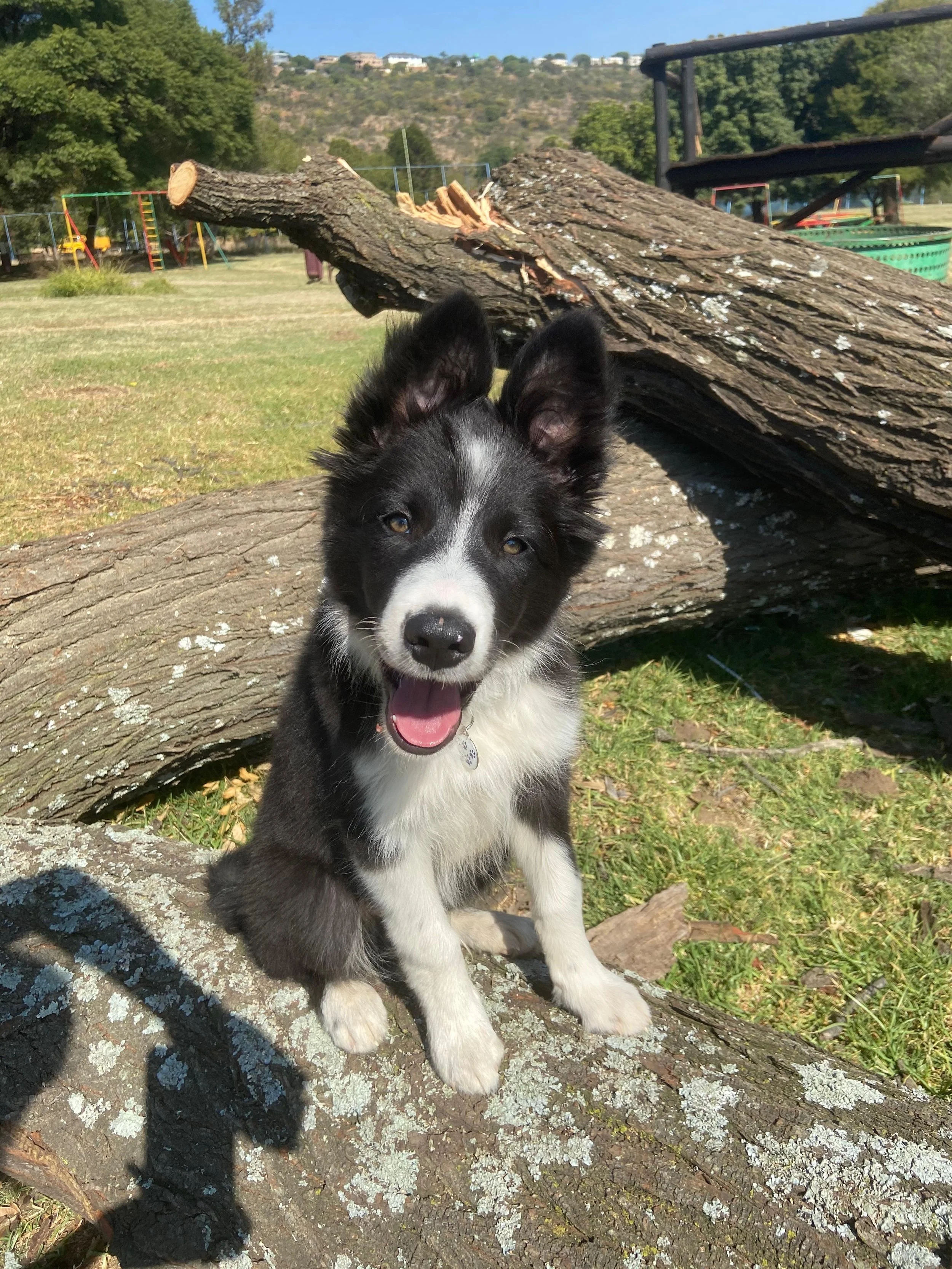
When Swift hit adolescence, it honestly felt like his recall disappeared overnight. Birds were more exciting than me. Sniffing was more rewarding. Other dogs were the best thing in the world. And suddenly, all the recall training we had done before seemed to vanish. I knew he couldn’t safely be off leash around distractions because once he locked onto something, he would just completely switch off. Anyone who has lived with an adolescent dog (especially a working breed or highly environmental dog) probably knows exactly what I mean.
I still remember one hike in Dullstroom where he spotted a dam in the distance and decided he absolutely HAD to go swimming. At one point he was literally just a tiny speck on the horizon. I remember standing there calling him over and over until eventually… I just stopped. He finally came back after his swim completely thrilled with himself. One of the biggest problems was also practical: my voice really doesn’t carry well outdoors, especially in wind or open spaces. The more emotional or frustrated I sounded, the less effective it became.
So we changed things. We switched to a whistle which immediately helped because it’s:
clearer
consistent
easier for dogs to hear at a distance
But the BIGGEST game changer was learning about the Double Recall and consistently training it.
Recall is actually two behaviours
One of the concepts behind the Double Recall is that recall is not actually one behaviour. It’s two completely different behaviours chained together:
Disengaging from the environment
Running back to you
And for dogs like Swift, the hardest part was never the running back… It was the disengaging. That’s the piece so many people overlook when training recall. We often expect dogs to instantly stop focusing on something biologically rewarding (e.g. birds, smells, wildlife, swimming, other dogs) and immediately sprint back to us. But for many dogs, especially adolescents, that’s incredibly difficult. This is where the Double Recall comes in.
The Reorientation Cue
The first part of the Double Recall is the reorientation cue. This is essentially the “check-in” cue. The goal is NOT for your dog to immediately come all the way back to you. The goal is simply:
“Turn your attention away from the environment and back toward me.”
That’s it. This cue acts like a positive interrupter. It helps break fixation and gives the dog support before asking for the full recall. For us, the whistle became this cue.
We practised it over and over:
indoors
in the garden
around mild distractions
during walks
around sniffing
around movement
And every single time Swift oriented back toward me, something good happened. That part is really important.
The Anchor Cue
Once the dog has disengaged and turned back toward you, the second part begins: the anchor cue. This is the cue that keeps the dog moving all the way back to you. Many people use: repeated whistles, “yep yep yep!”, “go go go!”, rapid happy sounds. The repeated rhythm almost acts like encouragement while the dog is running back. What I love about this system is that it supports dogs through the recall process instead of expecting them to instantly switch off from highly reinforcing things. Because that’s hard. Especially for adolescent dogs whose brains are basically screaming:
“CHASE THE BIRD.”
“GO SWIM.”
“SAY HI TO THE DOG.”
We had to make recall fun again
One of the most important concepts from the Double Recall is the 10:1 rule. For every one time recall ends something fun, you should aim for TEN recalls where amazing things happen afterwards. Because think about it from the dog’s perspective. If recall ALWAYS means leash on, freedom ends, leave the park, no more sniffing, no more fun…why would they want to come back?
So we started changing that. Sometimes recall meant:
chicken
a game
being released again
more freedom
chasing a toy
going back to sniffing
Body language matters too
Another thing I learned was how much our body language affects recall. When we panic, lean forward, stare directly at the dog or sound frustrated, we can actually make returning less appealing. Instead, I started: turning slightly sideways, moving backwards, crouching down, sounding playful and excited. Swift responded so much better.
The biggest lesson I learned
Reliable recall didn’t come from punishment, repeating cues louder and louder or trying to overpower distractions.
It came from clarity, reinforcement, consistency, gradual practice, emotional safety, making recall exciting. And most importantly: it came from understanding WHY Swift was struggling in the first place.
The Double Recall completely changed the way I think about recall training because it acknowledges something really important: Disengaging from the environment is hard.
Once I stopped expecting instant perfection and started supporting that process instead, everything improved. Now Swift’s recall is something I trust so much more because returning to me became genuinely valuable. That’s the kind of recall that I want!