The Look At That Game: Why It Works (and Why So Many People Get It Wrong)
The Look At That (LAT) game is one of the most well-known techniques in force-free dog training, especially when working with reactive dogs. Originally popularised by Leslie McDevitt in Control Unleashed, it’s often recommended as a go-to strategy for dogs who bark, lunge, freeze, or become overwhelmed by triggers in their environment.
And it really can be incredibly powerful. It’s made such a difference for my dogs and all the dogs that I work with. Here’s a guide from the SPCA: click here.
But over the years, both in my own training and working with clients, I’ve noticed something important: although LAT is widely used, it’s also widely misunderstood. And that misunderstanding is often the reason people feel like it “isn’t working.” After spending the past several months working through reactivity with my own dog, and finally starting to see real breakthroughs, I wanted to share a deeper, more practical look at what actually makes LAT effective.
Because the magic of this exercise isn’t just in what you do… it’s in how and why you do it.
It’s not about behaviour, focus on how your dog is feels
One of the biggest misconceptions about LAT is that it’s a behaviour-based exercise. On the surface, it can look like one. The dog looks at a trigger, then looks back at you, and gets rewarded. Simple enough. But that’s not actually the goal.
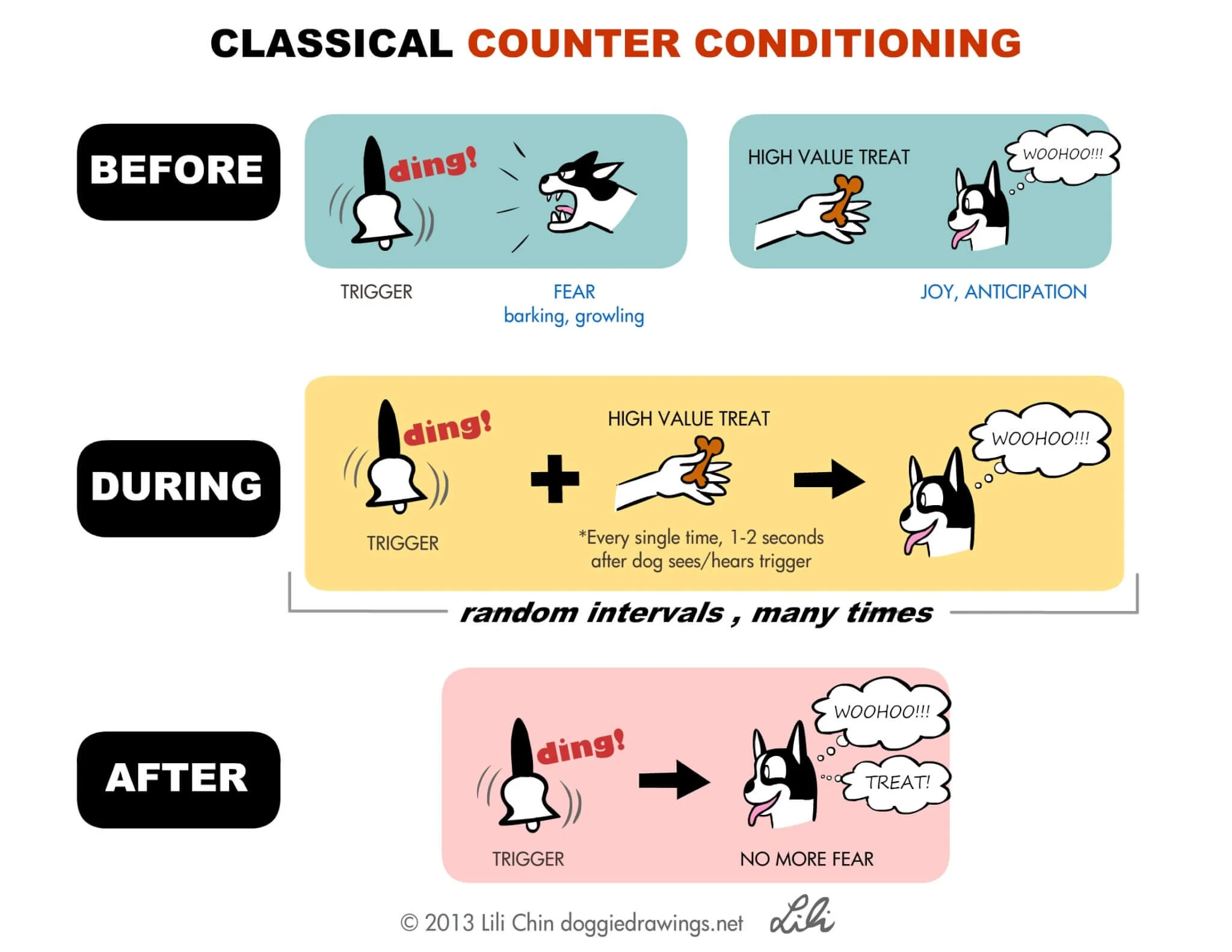
At its core, LAT is about classical counter-conditioning. That means, changing your dog’s emotional response to something they currently find difficult. As described in behaviour guidance, the aim is to shift the dog’s conditioned emotional response from negative (fear, frustration, anxiety) to positive through repeated pairings of the trigger with reinforcement. That means the most important moment isn’t when your dog looks back at you.
It’s when they first notice the trigger.
This is where I see a lot of people unintentionally working against themselves. They wait for their dog to be calm, to disengage, or to offer a “better” behaviour before rewarding. But by that point, the learning opportunity has often already passed or the dog is already too close to their threshold to process anything clearly. They’er not in their ‘thinking brain’.
Instead, what we want is something that may seem counterintuitive: The moment your dog sees the trigger, good things happen. Not later. Not if they behave. Not if they stay quiet. Immediately. Even if they’re tense. Even if they’re unsure. Even if they’re on the edge of reacting. Because you cannot reinforce an emotional response like fear. However, you can change what that emotional response becomes associated with.
Let your dog look, it’s the solution
Another common concern I hear is that allowing a reactive dog to look at their trigger will “make it worse.” In reality, the opposite is often true. For many reactive dogs, especially those who are vigilant by nature, the need to monitor their environment is incredibly strong. Trying to interrupt that, by asking for eye contact, pulling them away, or encouraging them to ignore something they find important, can actually increase stress.
LAT works because it removes that conflict. It allows the dog to look, to gather information, and to stay engaged with their environment, while we change what that experience means to them. Some trainers even describe LAT as teaching the dog to “report” the trigger to you, rather than react to it, which can reduce anxiety and improve communication.
Over or under threshold?
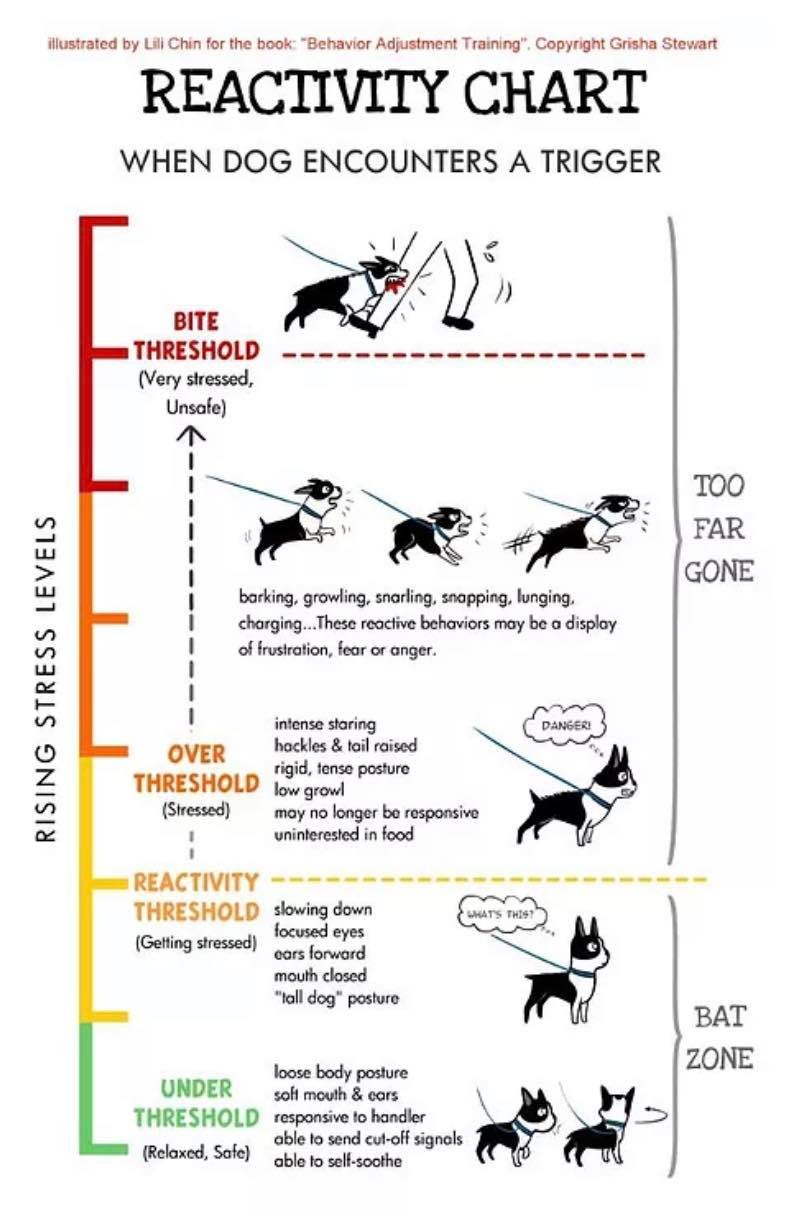
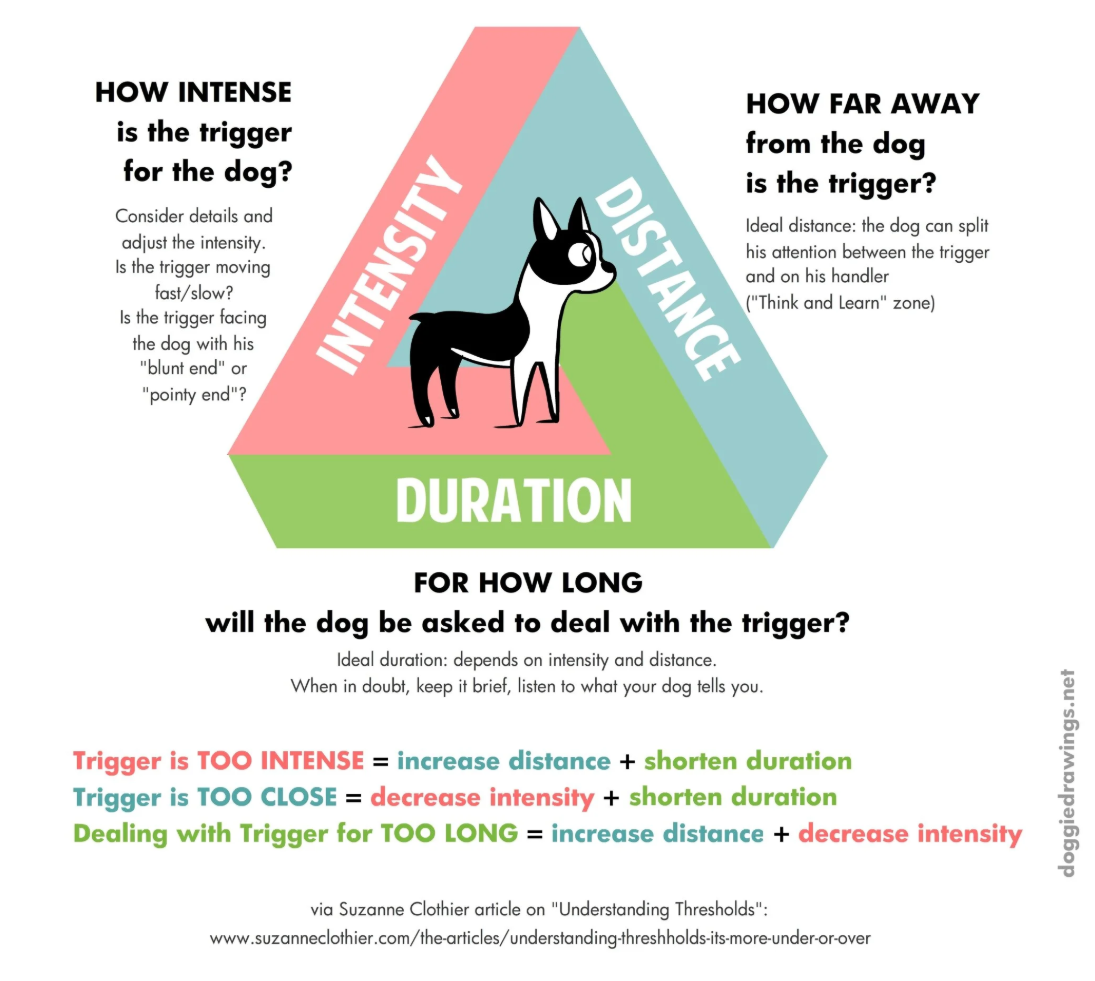
If there is one factor that determines whether LAT will work or not, it’s threshold. Threshold is the point at which your dog becomes too overwhelmed to learn. It’s not just barking and lunging, it can also look like intense staring, stiff body language, or refusing food. Three main variables influence this: how far away the trigger is, how long your dog is exposed to it, and how intense that trigger is. When a dog is under threshold, they can notice the trigger and still process information. This is where learning happens. When they are over threshold, they are in survival mode. At that point, no amount of training is going to be effective, the only goal is to create distance and help them recover. This is why LAT often looks very “easy” in theory but feels much harder in real life. It requires careful setup, good observation, and sometimes starting much further away than people expect.
Why LAT works
What I’ve personally found most powerful about LAT is that it gives dogs the opportunity to regulate themselves. Rather than relying on constant redirection or control, we allow the dog to engage with the world in a way that feels safe and predictable. Over time, the pattern becomes clear: Seeing the trigger predicts something positive. And eventually, that shift in expectation leads to a shift in emotion. For some dogs, this shows up as softer body language. For others, it’s quicker disengagement, less intensity, or simply the ability to exist in closer proximity to triggers than before. In my own journey, we went from struggling at distances of around 20 metres to being able to work comfortably within about 5 metres of other dogs. That didn’t happen through stricter control or better obedience. It happened through repetition, consistency, and a gradual change in emotional association.
The small details make a big difference
While the concept of LAT is simple, the details matter more than people often realise. The value of your reinforcement can completely change the outcome. Early on, especially, the reward needs to feel significant enough to compete with the environment. For many dogs, that means more than a single treat, it means something that genuinely stands out. Short sessions are another game changer. Some of the most effective work I’ve done has been in sessions lasting just a few minutes, often repeated in different locations. This prevents overwhelm and keeps learning clean and focused. I’ve also found that varying rewards helps maintain motivation. Even highly food-driven dogs can lose interest if the same reinforcement is used repeatedly over time. And perhaps most importantly, practising LAT in easier contexts (with neutral or non-trigger stimuli) can help dogs understand the pattern before applying it in more challenging situations.
A Final Thought
If there’s one thing I’d encourage anyone working on reactivity to remember, it’s this:
Don’t get caught up in what your dog is doing.
Pay attention to how your dog is feeling.
Because when the emotional response begins to change, the behaviour almost always follows.